


Why Do We Use De-Icing Salt?
People have depended on salt for centuries. Originally used to preserve and season food, salt has since become useful for many other purposes, including de-icing.
After the Second World War, the UK experienced strong economic growth, which continued until the mid-1970s. This led to a large increase in the number of vehicles on the road. As a result, something had to be done to improve safety during winter.
De-icing salt became the answer. Salt lowers the freezing point of water, helping to melt ice and prevent it from forming. This makes roads and pavements safer and reduces the risk of slips, falls, and accidents.
Why Did We Start Using De-Icing Salt?
While it is unknown exactly how long people have been gritting the roads, there is evidence of roads in the UK being gritted as early as 1903.
Back then, this practice wasn’t as widespread as it is today since people thought of harsh winters as normal. Interestingly, when gritting was necessary, it was done using sand and cinders as they were cheap and easy to find. These added traction and were considered to be enough at the time since the number of vehicles on the road was much lower than it is today. By the end of 1904, only about 23,000 vehicles were registered in the UK.


However, as the UK experienced strong economic growth after the Second World War, these numbers started increasing drastically. By 1955, there were about 3.3 million vehicles, and in 1958, the UK’s first motorway, the Preston Bypass, opened. Adding traction alone was no longer enough, and something had to be done to make the roads safer.
As a result, sand and cinders were gradually replaced by de-icing salt. Unlike these materials, salt could actually melt ice. This made it a much more effective way of keeping roads safe during winter.
Nowadays, it is estimated that around 2 million tonnes of salt are spread onto UK roads each year, reducing collisions by 85%. This also saves the UK an estimated £2 billion in delays to the economy.
To learn more about this, read our ‘Road Grit Through the Ages: The Evolution of UK Winter Safety’ blog.
How Does De-Icing Salt Melt Ice?
De-icing salt has the ability to lower the freezing point of water, a process called freezing point depression.
When mixed with moisture, salt dissolves and separates into sodium and chloride ions. These interfere with the formation of ice crystals, making it harder for water to freeze. As a result, salt offers effective ice prevention at temperatures as low as around -8°C.


Salt for de-icing can be used in two different ways. Firstly, it can be spread before snow and ice arrive - a practice called pre-treatment. This is the most effective way of de-icing an area as it prevents ice from forming in the first place and snow from sticking to the road surface.
Alternatively, you can spread it once the surfaces are already icy, so that it can melt the ice. However, it is worth noting that this process is not immediate and can take longer in quieter areas. This is because the salt needs moisture to work. Vehicle and foot traffic help as the movement crushes the ice, making it easier for the salt to mix with moisture and melt ice. In remote, quieter areas, where there is no traffic to help speed up the process, the roads and pavements can stay icy for long periods of time, even if they have been treated.
Types of De-Icing Salt
There are two different types of salt used for de-icing: rock salt and white salt.
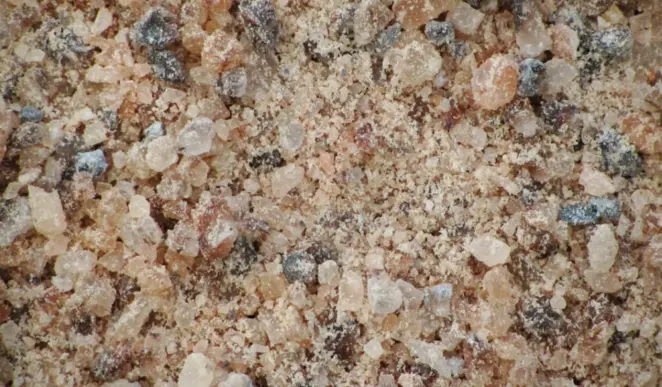
Rock salt is found in many places all around the world. It was formed when ancient seas evaporated, leaving huge amounts of salt behind. When this happened in the UK, the wind carried sand from the east, mixing it with the salt and giving it a brown colour. Over time, these deposits were buried beneath layers of soil, rock, and other debris. There are currently three active rock salt mines in the UK, including Winsford Mine, where we source our rock salt.
Rock salt is commonly used by highway agencies and is usually spread by the gritters once the cold weather hits. It is best for high-traffic areas due to its high durability, making it a perfect option for driveways, roads, and large car parks. However, it does leave a slight residue, so it is best used in areas where this is not a concern.

White salt, on the other hand, is harvested by evaporating seawater, which takes place in warmer countries, such as Spain or Egypt. The salt is then imported to the UK via shipping containers. It has fewer impurities and does not leave any brown residue behind.
This makes it the perfect option if you are planning to de-ice areas that experience a lot of traffic in and out of buildings, such as hotel entrances, shopping centres, hospitals, schools, or car parks. It is the right choice if you are looking for a product that will not stain any indoor floor surfaces if accidentally brought inside.
If you’re still wondering why we use de-icing salt, the answer is simple – it keeps the roads, pavements, and other surfaces safe during the colder months. Unlike other de-icing options that were used in the past, such as sand and cinders, which mainly provided traction, salt can lower the freezing point of water. As a result, it can help to prevent the ice from forming or help melt it more quickly.
Are you ready for winter? Explore our full range of de-icing salt products and find the right solution for your needs.
